Technical analysis of infiltration
In the hotel, restaurant and catering industry, operational continuity is the primary planning requirement. However, those working in the contract sector often have to handle one particular critical variable, dampness, in the form of ambient humidity and accidental moisture. For years now, laminate has been the first choice because of its looks. However, one intrinsic structural limitation has held it back, its wood fibre composition. In environments exposed to constant steam or pooling water, the organic substrate inevitably tends to absorb liquids, leading to swelling.
GXG SPC changes the game by introducing the stability of inorganic materials. As this composite is a mix of stone powder and polymers, the core of the tile has no components that are subject to absorption.
Strength is structural,
not surface-level
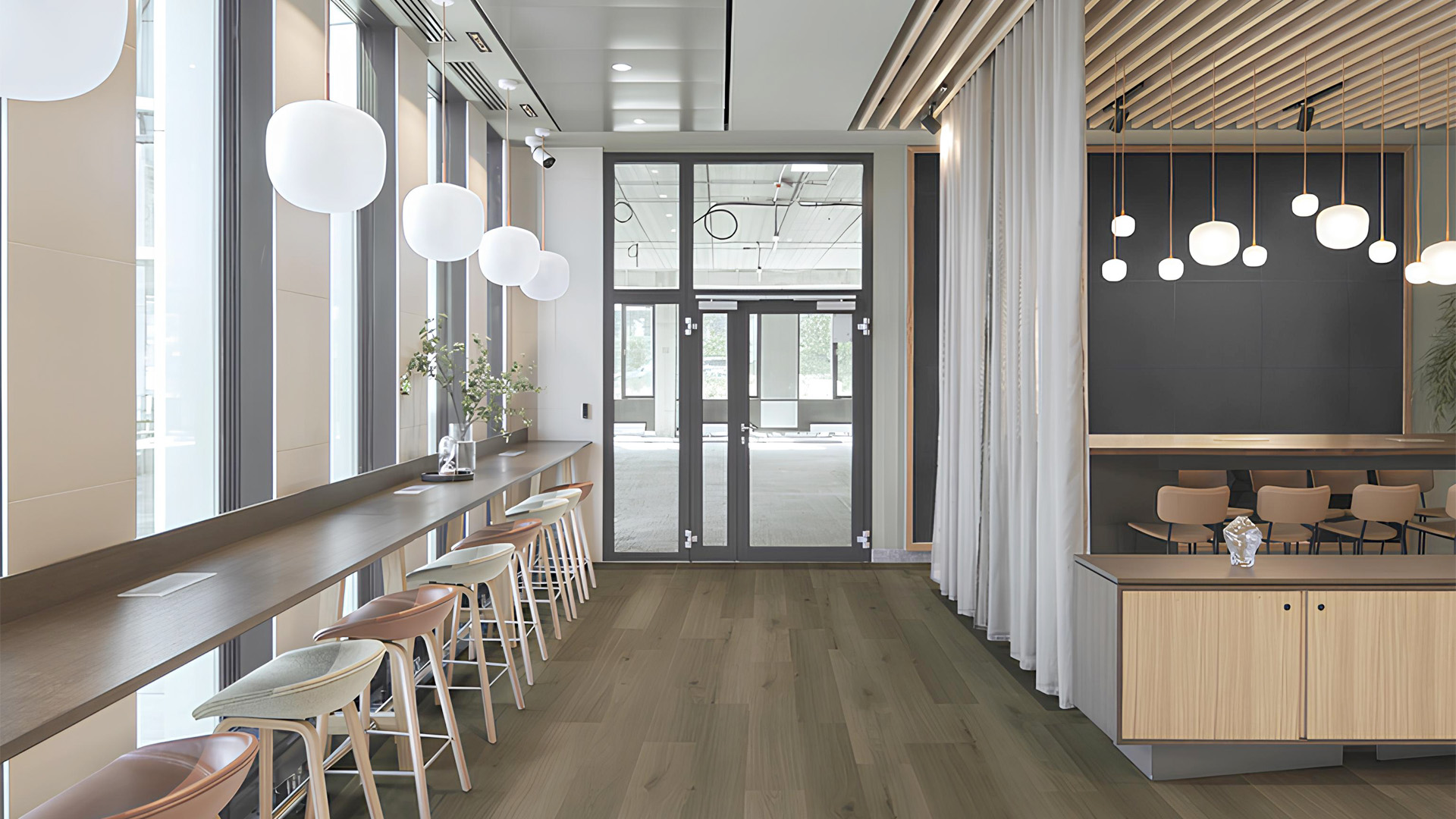
Unlike materials treated only with water-repellent paints, GXG SPC is water and moisture resistant throughout its entire body. This technical feature makes it suitable for settings where frequent washing is necessary for hygiene purposes or environments that are constantly exposed to moisture, such as changing rooms, wellness areas, and the area behind the front counter in restaurants, cafes, and bars. Even in situations where prolonged exposure to liquids is common, the tile maintains its original size, does not warp, and does not change in any way. For a contractor, choosing this technology means opting for a solution that prevents post-installation problems linked to water and ensuring stability that meets the needs of facilities rooms.